
In today’s competitive job market, it is more important than ever to have a well-crafted resume. A resume format that is easy to read and highlights your skills and experience will help you stand out from the competition. One way to make your resume stand out is to use bullet points to list your accomplishments. How many bullet points should you include per job on resume? That depends on the length of the job description and how much experience you have in that field. In this blog post, we will discuss resume bullet points examples and how to use bullet points effectively on your resume!
There’s no definitive answer to this question as it can vary depending on your experience and the job you are applying for. However, a good rule of thumb is to use 3-5 bullet points per job. This will help you highlight the most important aspects of each role while still keeping your resume concise. If you have a lot of experience in a particular field, feel free to use more than 5 points for that job. But be careful not to go overboard! Too many bullet points can make your resume seem cluttered and overwhelming.
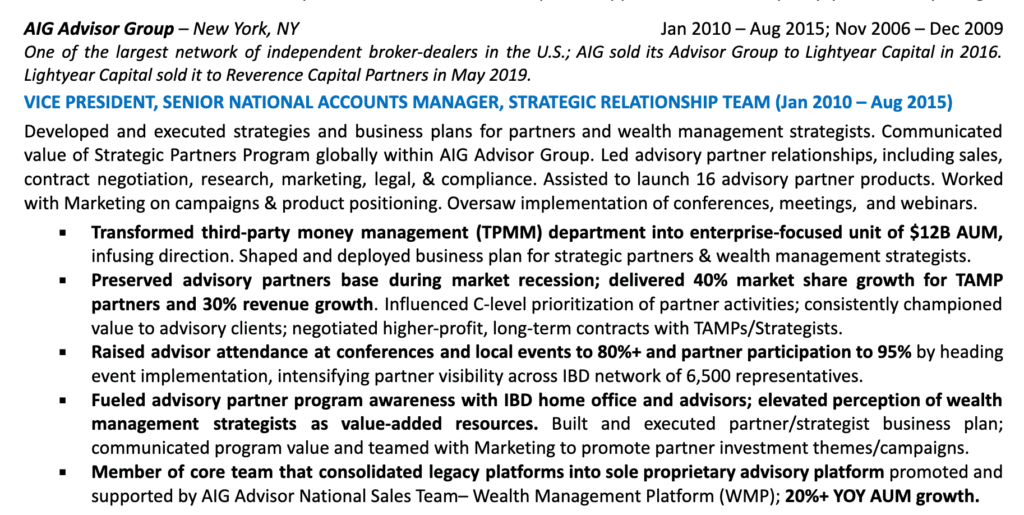
Why Should You Use Bullet Points for Your Resume?
The number of bullet points in your resume may help employers recognize your abilities and experience. Bullet points are especially beneficial for describing your professional accomplishments and responsibilities in the job section of your CV. You can also use bullet points in your skills section and elsewhere on your resume to help you group information and make it easier to understand.

When are Resume Bullet Points Appropriate?
Bullet points can be used on any type of resume. They’re a helpful resume design technique that works for both chronological, combined, and functional resumes. Bullet points may also be incorporated into the structure of your resume.
How to Use Bullet Points in Your Resume
Bullet points, in a nutshell, are quite useful in any part of your resume. Bullet points are merely symbols used in typography to introduce items in a list, strictly speaking. However, they perform far more than that. In a resume, bullet points to aid with the flow of material by separating it into smaller sections and adding emphasis.
Bullet points are a must. That’s essential because recruiters and hiring managers want to be able to scan quickly and isolate the data they’re looking for. Bullet points break down everything into bite-size, easy-to-identify pieces.
The majority of advice about resume bullet points is aimed at the work experience section. Yes, that’s where you should utilize them. But we’ll show you how to make those beneficial dots useful in every resume section, as well as some examples of excellent resume bullet points.
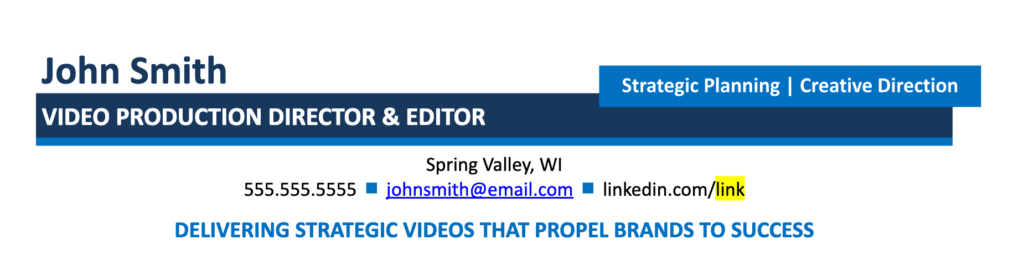
1. Resume Header
Bullet points are a useful addition to your resume header from the top down. Employers can see how to reach you at a glance by using them to neatly separate your contact information from the rest of your bio.
2. Resume Profile
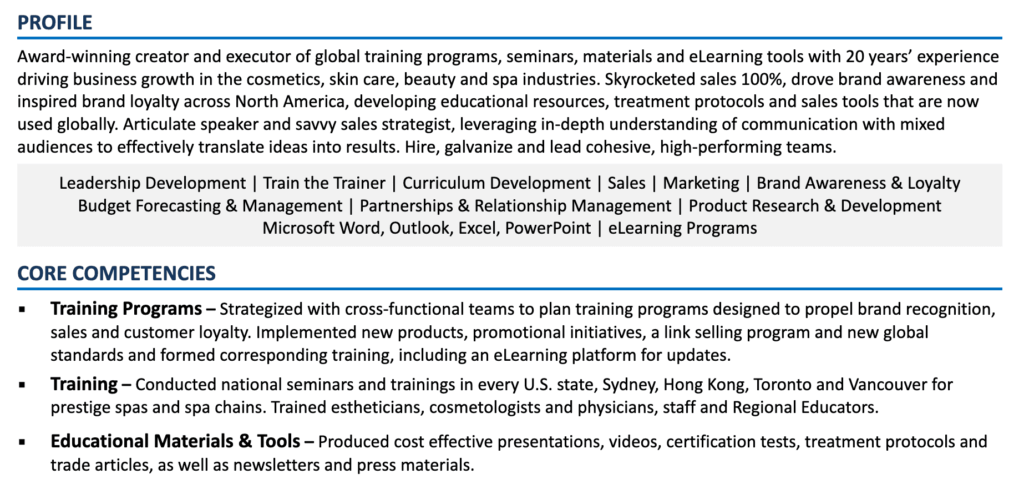
Yes, bullet points may be used effectively in a resume profile. This is the short, introductory section at the beginning of your CV that gets things started off on the right foot. They’re not used in a normal objective or summary of qualifications. If you want to write a summary of qualifications, however, they become very useful.
It’s a quick rundown of your relevant expertise, skills, and professional accomplishments. It’s also meant to demonstrate how well you meet the qualifications for the position you’re applying for. The bullet point format is often used to display that information, as seen in this example.
3. Work Experience Section
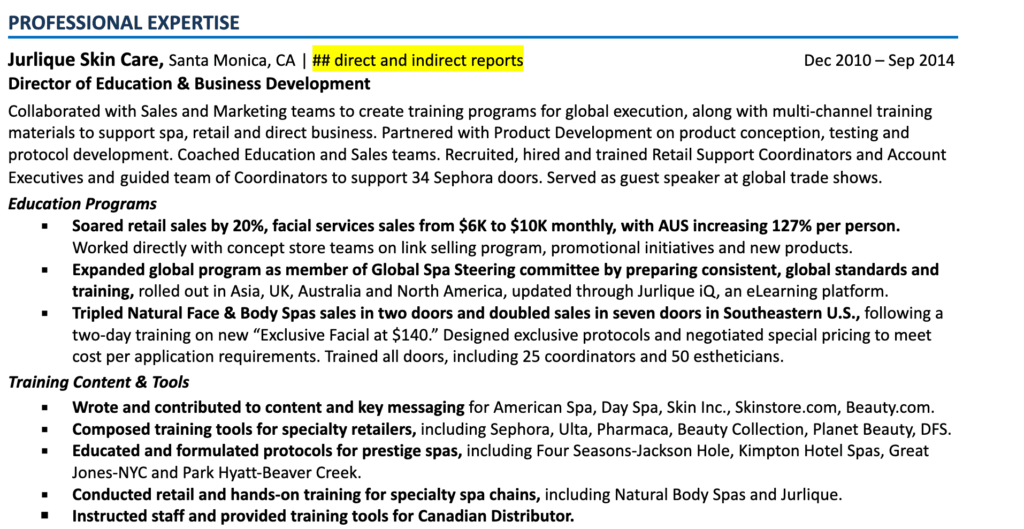
This is where you may put up to three resume bullet points. Here’s how to structure it.
- In reverse chronological order, list your work history.
- Begin by providing the following information: your job title, employer’s name and address, start date, and ending date.
- Write bullet points describing your position under each project.
- Don’t just describe what you did; instead, show how much you improved the position. To demonstrate your worth, utilize accomplishment statements, the PAR (problem, action, result) format, and quantified results. Numbers can add a lot of punch to your words.
How many bullet points should a resume have?
In your work experience section, write between 3 and 6 bullet points for each task. Make them 1–2 lines each. For your most recent and important experience, use more bullet points.
4. Education Section
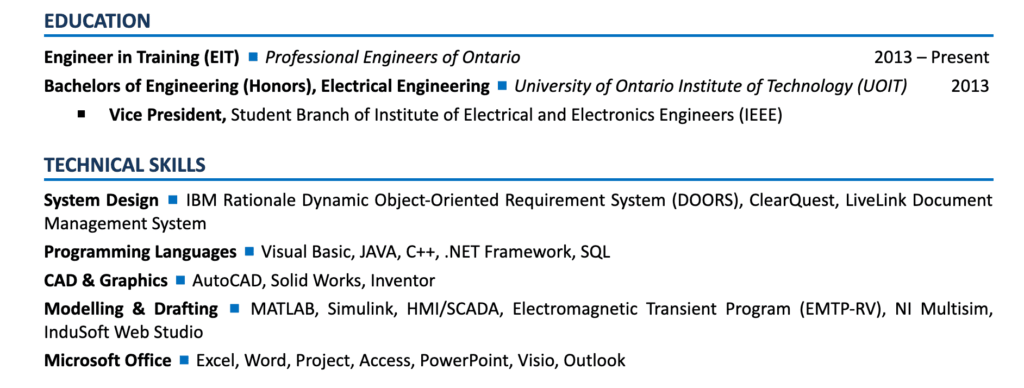
Your education portion is another place where you can use resume bullet points to your advantage. This is an excellent addition to resumes for people with no prior work experience, particularly students and recent graduates. To demonstrate essential skills and knowledge that are relevant to the position you’re looking for, add a few bullet points immediately below your standard educational information. Here are some:
5. Skills Section
Bullet points are also popular in resumes, particularly in the skills section. However, you can’t just pick any set of abilities to make it work; you must be particular. You need to be targeted like you were with the rest of your resume. Read the job advertisement and note the responsibilities and criteria for the position; then make sure your skills section matches as closely as possible within your limitations. Here are some more ways to improve your skill with bullet point bullets.
- Write bullet points for 5–10 applicable skills. The number will be determined by the amount of space you have and the technological requirements of the position.
- Use a mix of hard and soft skills, but bear in mind that certain abilities are transferable skills that are valued in almost every sector. Communication abilities, analytical capabilities, and IT talents are all excellent examples.
6. Additional Sections
Adding more sections to your resume allows you to include more evidence of your skills and experience. Volunteering, foreign languages, hobbies, and personal interests, and projects are all excellent examples.
How to Write Resume Bullet Points
You can’t just throw in bullet points and expect things to turn out well. The spray-and-pray method is an excellent illustration of what not to include in a CV. You must employ the correct approach and develop effective bullet points that complement your writing while also revealing your abilities as a writer. Here are some simple suggestions to get you started.
How to Make the Most of Your Resume Bullet Points
- Use a strong resume action word to start each bullet point for additional impact.
- Use your LinkedIn profile and achievements to show that you have an understanding of the Link experience and skills. Instead of simply listing all of your talents, use resume bullet points to demonstrate that you have the potential to be a competent employee.
- Make a list of your accomplishments and quantify them. Bullet points with measurable outcomes and metrics are powerful.
- Use active voice and clear language.
- Instead of whole sentences, use sentence fragments. For example, “Generated $500k in profits to increase revenue by 30%.”
- Don’t save the best for last. Begin your bullet point list with the most impressive/important skill, experience, or accomplishment.
- Being consistent with your formatting is critical. Bullet symbols are effective in a variety of shapes, including circles, squares, and diamonds.
- Don’t be generic. Aim for a targeted resume by focusing your bullet points on how you meet the essential qualifications for the position.
Which Is Better: Bullet Points or Paragraphs on a CV?
There’s no debate. On a resume, bullet points are always preferable to paragraphs. They provide more white space on the page and improve the layout. And there’s plenty of proof that it improves readability, comprehension, and user satisfaction.
Is it Okay to Use Bullets Instead of Periods for a Resume?
It’s a touchy subject, but the generally accepted guideline is that you must include a period if your resume bullet points are written as complete statements. If they’re fragments rather than entire sentences, though, you can omit them. However, consistency is essential; don’t make some bullets in a list with periods and others without, it’ll just appear chaotic.

