






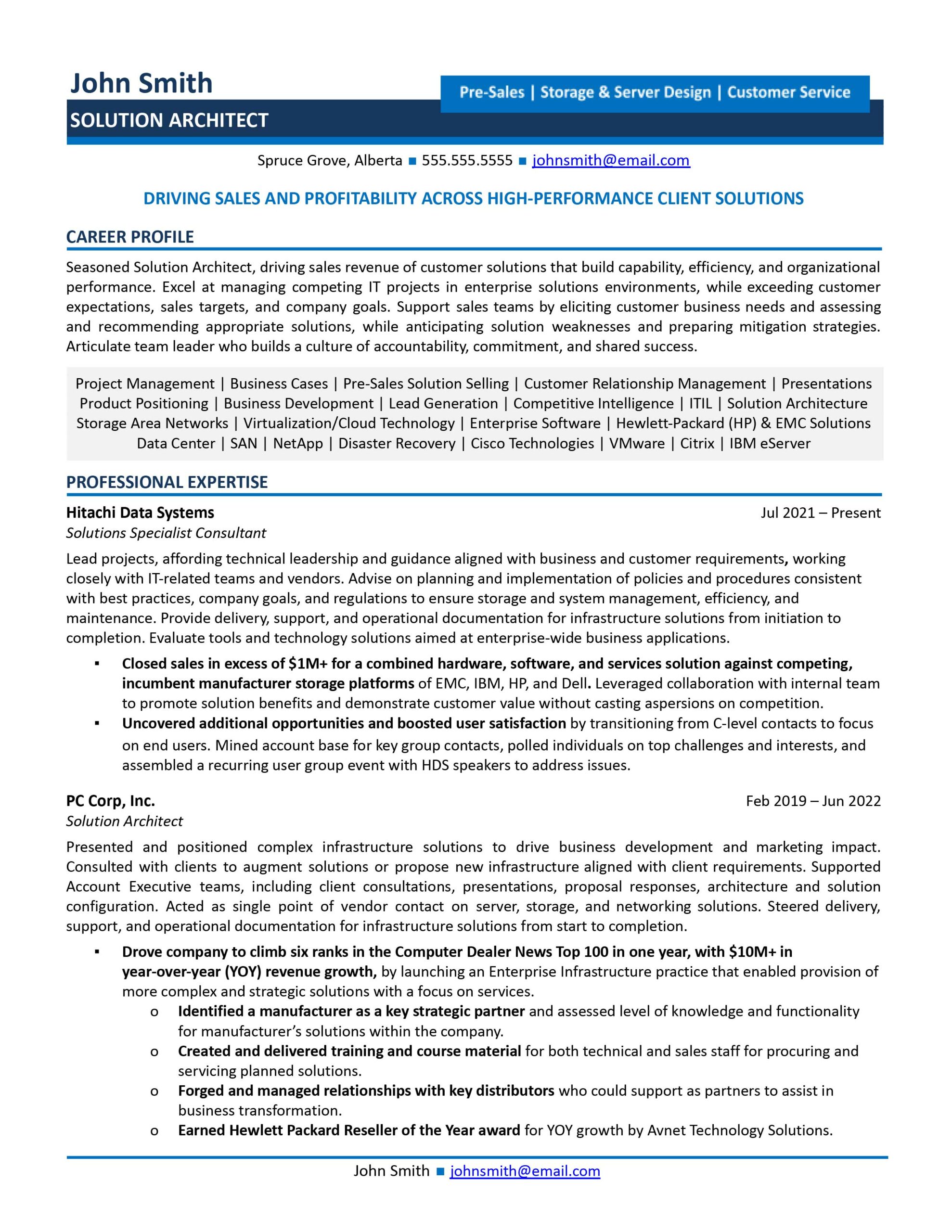
l. Solution Architect Resume Sample
Position Yourself Ahead of Other Candidates!
We partner with senior leaders to position them for high-impact opportunities - through a strategically crafted, ATS-optimized executive resume and by managing your entire job search end-to-end.
Book a 20-minute confidential call to speak directly with Arno Markus, Former Executive Recruiter and 32X Award-Winning Resume Writer
ll. Global Partner Solution Architect Resume Sample

Position Yourself Ahead of Other Candidates!
We partner with senior leaders to position them for high-impact opportunities - through a strategically crafted, ATS-optimized executive resume and by managing your entire job search end-to-end.
Book a 20-minute confidential call to speak directly with Arno Markus, Former Executive Recruiter and 32X Award-Winning Resume Writer
Related Resume Samples:
Request a Consultation from an Award - Winning Recruiter and Resume Writer
(Board C-Level VP, Director & Mid - Career Professionals)
How to Write Solution Architect Resume
The role of a Solution Architect is one of the most vital in the tech industry. Bridging the gap between technical requirements and business needs, a Solution Architect crafts precise solutions that cater to organizational objectives. As such, a resume for this role needs to demonstrate a blend of technical prowess, strategic insight, and adept communication. This guide will walk you through crafting a compelling Solution Architect resume that stands out.
Understanding the Role
Before you begin, grasp the depth of a Solution Architect’s responsibilities:
- They analyze business requirements and ensure they align with the technology solutions.
- They design & oversee the implementation of solutions, ensuring they are scalable and sustainable.
- They liaise between technical and non-technical stakeholders, translating requirements and solutions between both.
Starting Off Right: The Resume Header
Your header should be clean and straightforward:
- Full Name: Your name should be the most dominant text.
- Contact Information: Include phone number, professional email, LinkedIn, and city/state.
Craft a Clear Objective
A concise objective can set the tone:
Example: “Experienced Solution Architect aiming to leverage a decade of experience in cloud solutions and enterprise software integration at XYZ Corp.”
Industry Stats
According to the U.S. Bureau of Labor Statistics (BLS), the employment of top executives is projected to grow 6% from 2021 to 2031, which is about as fast as the average for all occupations.
Powerful Summary for Solution Architect Resume
In today’s competitive job market, a Solution Architect’s resume must pack a punch from the get-go. This is where the resume summary comes into play. Essentially, it’s your elevator pitch, condensing your skills, experience, and unique value into a few compelling lines. Let’s delve into the art of crafting a magnetic summary for a Solution Architect resume.
Understanding the ‘why’ is crucial. The resume summary serves to:
- Grab Attention: Recruiters spend mere seconds initially scanning each resume.
- Convey Value Quickly: It should encapsulate your professional worth in a nutshell.
- Set the Tone: It provides context for the rest of the resume.
Begin with Your Experience
Your experience is a testament to your expertise. Starting with it establishes credibility.
Example: “Solution Architect with over 10 years of experience…”
Highlight Technical Proficiencies
As a Solution Architect, your grasp on certain tools, platforms, or methodologies is crucial. Pick the most relevant and impressive ones.
Example: “…expertise in cloud computing platforms like AWS and Azure, and adept in Agile methodologies…”
Examples of Powerful Summaries
- “Solution Architect with 8+ years of experience in crafting scalable cloud solutions using AWS. Recognized for enhancing operational efficiency by 25% through innovative strategies and a collaborative approach.”
- “Dedicated Solution Architect with a decade in enterprise software integration. Adept at translating business needs into tech solutions, with a track record of leading teams to complete projects 15% under budget.”
- “Proactive Solution Architect with extensive experience in AI-driven solutions. Combines deep technical knowledge with a knack for bridging communication gaps between tech and non-tech stakeholders.”
Your career evolves, and so should your summary. As you gain more experience, achieve new things, or acquire additional skills, revisit and refine your summary to reflect the most current and impressive version of you.
Expert Tip: Remember summary sections are brief and contain tiny fragmented sentences.
Position Yourself Ahead of Other Candidates!
We partner with senior leaders to position them for high-impact opportunities - through a strategically crafted, ATS-optimized executive resume and by managing your entire job search end-to-end.
Book a 20-minute confidential call to speak directly with Arno Markus, Former Executive Recruiter and 32X Award-Winning Resume Writer
Showcase Your Core Competencies
The Solution Architect is tasked with designing and orchestrating solution structures that meet both tech requirements and business goals, a Solution Architect wears multiple hats. As a result, their resume, especially the skills section, must be a well-curated blend of technical acumen and business aptitude. This article breaks down how to construct an impactful skills section for a Solution Architect resume.
For a Solution Architect, skills are the currency. Recruiters and hiring managers are particularly interested in this section because it:
- Highlights your technical proficiency.
- Showcases your soft skills, which are crucial for bridging technical and business worlds.
- Directly relates to job performance and the ability to fulfill job requirements.
Categorizing Skills
Broadly, the skills can be classified into:
- Technical Skills: These are the hard skills specific to the architecture domain.
- Soft Skills: The interpersonal and management skills that enable effective teamwork, leadership, and problem-solving.
Listing Technical Skills
Technical skills are the bedrock of a Solution Architect’s role. Here are some essential ones:
- Cloud Platforms: AWS, Azure, Google Cloud.
- Technologies & Frameworks: Microservices, API design, Serverless architecture.
- Programming Languages: Java, Python, C++.
- Database Management: SQL, NoSQL.
- Software Development Life Cycle (SDLC): Knowledge of methodologies like Agile, Scrum, or Waterfall.
- Cybersecurity: Ensuring solution robustness against threats.
- Infrastructure Design: For scalable and sustainable solutions.
Emphasizing Soft Skills
A Solution Architect’s effectiveness isn’t solely rooted in technical knowledge. The following soft skills are equally pivotal:
- Communication: Ability to convey technical concepts to non-technical stakeholders and vice versa.
- Problem Solving: Crafting solutions to complex business challenges.
- Stakeholder Management: Collaborating with both tech teams and business units.
- Project Management: Overseeing projects from ideation to completion.
- Leadership: Guiding teams towards achieving architectural objectives.
- Analytical Thinking: Assessing business requirements and translating them into technical specifications.
- Negotiation: Balancing technical possibilities with business needs.
Tailoring to the Job Description
Adapting your skills section to align with the job description can make your resume stand out:
- If the job description emphasizes API integration, and you have that skill, it should be prominently listed.
- Understand the company’s tech stack from the job listing and emphasize your proficiency in those technologies.
Quantifying Where Possible
Numbers grab attention. If you’ve streamlined processes, leading to faster solution deployment, mention that. E.g., “Used Agile methodologies to expedite project timelines by 20%.”
Expert Tip: By carefully reviewing the job posting and working with an executive resume writer, you can ensure that your resume has the right keywords!
Detail Your Work Experience
The experience section is arguably the heart of a Solution Architect’s resume. It provides a chronological snapshot of your professional journey, highlighting not just where you’ve been, but more importantly, what you’ve achieved. For roles as critical as a Solution Architect, where both depth and breadth of experience are vital, this section holds significant weight. Let’s explore how to detail this part with precision and impact.
The experience section:
- Demonstrates your career trajectory and growth.
- Validates your expertise and skills.
- Highlights your accomplishments and impact on previous roles.
Structure is Key
For each position you list:
- Job Title: Clearly state your designation.
- Company Name: Followed by its location.
- Employment Duration: Month & Year format is standard (e.g., Jan 2018 – Aug 2021).
- Responsibilities & Achievements: List these in bullet points for clarity.
Action Words to Start Bullet Points
Begin each bullet point with strong action verbs. This adds dynamism to your descriptions:
- Designed
- Implemented
- Led
- Coordinated
- Analyzed
- Collaborated
Detail Specific Roles & Responsibilities
As a Solution Architect, your responsibilities might vary significantly across companies or projects. Be precise:
- “Collaborated with cross-functional teams to design an enterprise-scale solution for eCommerce platforms.”
- “Analyzed business requirements of clients to craft tailored cloud migration strategies.”
Quantify Achievements
Numbers stand out and provide scale to your accomplishments:
- “Led a team that successfully reduced system downtimes by 25%.”
- “Implemented an optimization strategy that saved the company $2 million annually.”
Highlight Notable Projects
In addition to regular duties, specific projects can showcase depth and breadth:
- “Oversaw the integration of AI-driven analytics into the company’s main product, resulting in a 40% increase in user engagement.”
Tailor for the Role
Align your listed experiences with the requirements of the job you’re applying for:
- If the job emphasizes experience with specific technologies or platforms, ensure those are visible and detailed in your experience.
- Remove or limit details that might be irrelevant to the potential role.
Here are few examples:
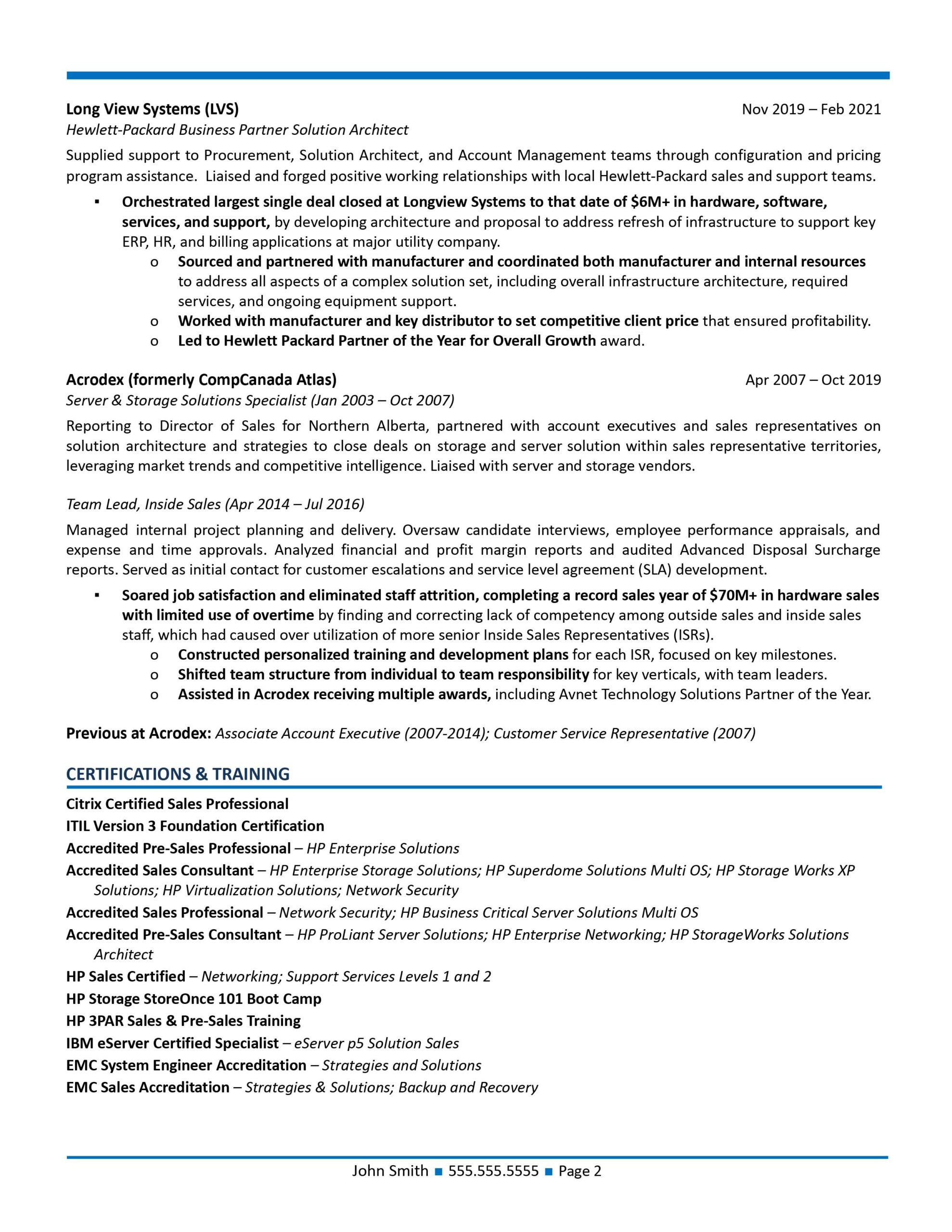
Solution Architect | ABC Tech Solutions | January 2018 – Present
- Led a team to design and implement a multi-cloud strategy, resulting in a 20% cost savings and improved redundancy.
- Worked closely with sales teams to understand customer needs and designed tailor-made solutions which boosted sales by 15%.
- Collaborated with development teams to implement agile methodologies, improving project delivery time by 30%.
Senior Software Developer | XYZ Tech Corp | January 2014 – December 2017
- Spearheaded the migration of legacy applications to microservices architecture.
- Trained a team of 20 developers on best coding practices and modern frameworks.
- Automated the testing processes, which cut down release times by 40%.
Position Yourself Ahead of Other Candidates!
We partner with senior leaders to position them for high-impact opportunities - through a strategically crafted, ATS-optimized executive resume and by managing your entire job search end-to-end.
Book a 20-minute confidential call to speak directly with Arno Markus, Former Executive Recruiter and 32X Award-Winning Resume Writer
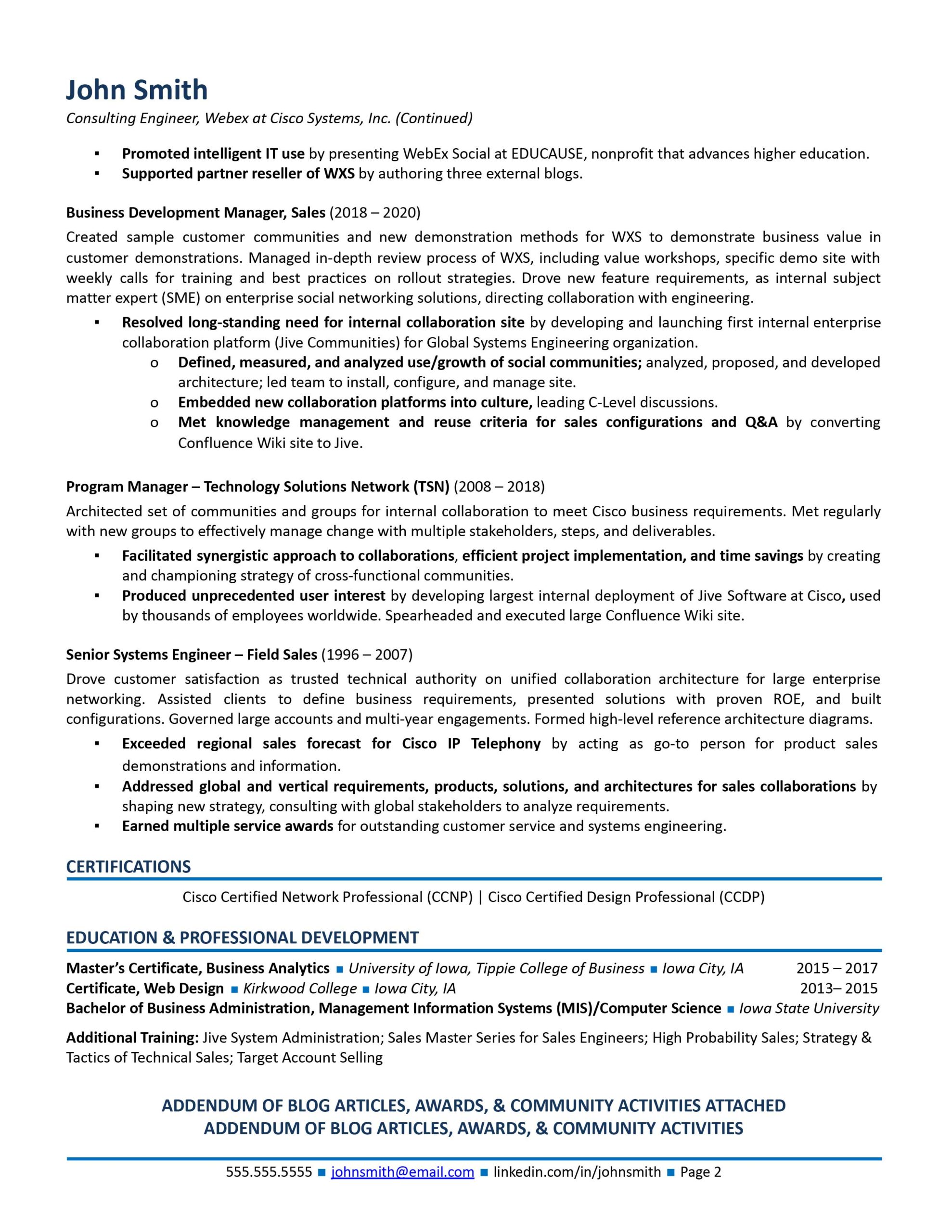
Highlight Your Education and Professional development
The role of a Solution Architect stands at the intersection of technology, business, and strategy. While practical experience in this domain is invaluable, academic qualifications provide a foundation on which this experience is built. The education section of a Solution Architect’s resume is a testament to this foundational knowledge. In this article, we delve deep into creating an impactful education section that complements your professional journey.
The education section serves several functions:
- Establishes Credibility: It validates your foundational knowledge in relevant fields.
- Fulfills Prerequisites: Some organizations require specific educational qualifications.
- Highlights Continuous Learning: For ever-evolving fields like IT and architecture, continuous learning is vital.
Structuring the Education Section
For clarity and consistency, the following structure is recommended:
- Degree & Major: Start with your highest degree. E.g., “Master of Science in Information Technology.”
- Institution Name: Followed by its location.
- Graduation Date: Month & Year format is typical.
- Relevant Courses or Thesis: Especially if they align with the job you’re applying for.
Including Certifications
The world of IT and solutions architecture is rife with professional certifications. If you’ve pursued certifications like:
- AWS Certified Solutions Architect
- Microsoft Certified: Azure Solutions Architect Expert
- TOGAF or other enterprise architecture certifications.
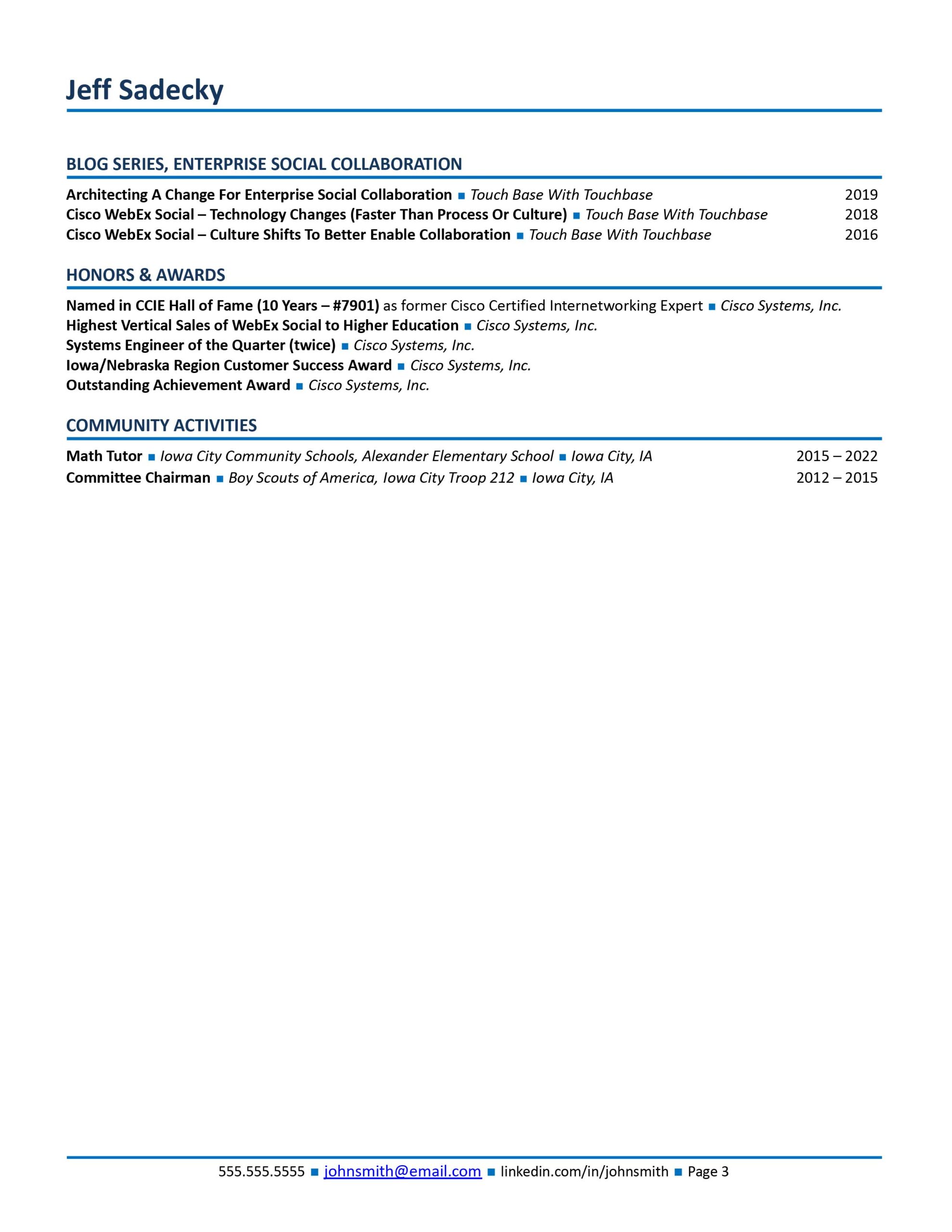
Highlighting Academic Achievements
If you’ve achieved something noteworthy during your academic pursuits, such as:
- Graduating with honors
- Winning tech-related competitions or hackathons
- Publishing a relevant paper or thesis
These can provide a further edge, underscoring your dedication and prowess in the field.